 RefreshRank
Answer-First Introductions: Win the Snippet, Keep the Reader
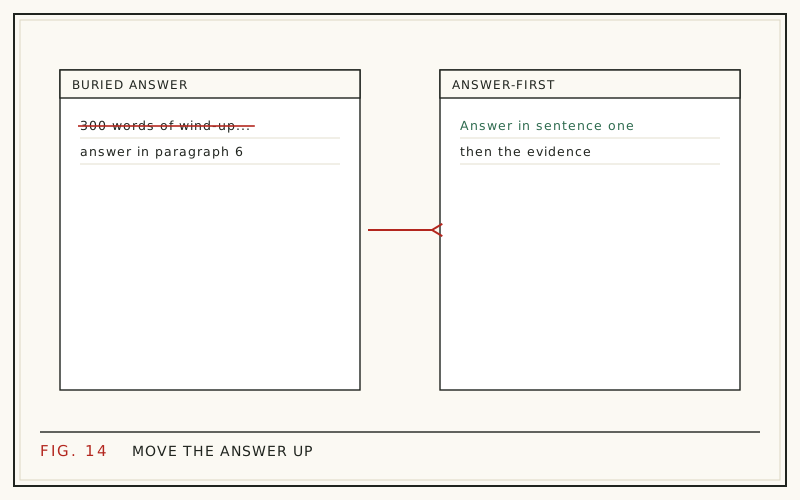
An answer-first introduction gives the direct answer to the title's question in the first two or three sentences, then spends the rest of the article earning trust in that answer. It is one of the highest-value edits you can make to an old post: impatient readers get what they came for and stay, and search engines get a clean, quotable passage to lift into featured snippets and People Also Ask.
The stakes keep rising. SparkToro and Datos found that 58.5% of US Google searches in 2024 ended without a click to the open web. When clicks are that scarce, a post that makes readers dig for the answer loses twice: skimmers bounce back to the results, and the answer boxes quote whoever wrote the clearer passage.
Here is the pattern, the evidence behind it, and how to retrofit it onto posts you already have.
What does an answer-first introduction look like?
Take a post titled 'How often should you update blog posts?'. A buried intro opens with three sentences about how content is an investment and consistency matters. An answer-first intro opens: 'Most posts earn an update every six to twelve months, sooner if the topic moves fast or the traffic is already slipping.' The answer is complete before the first scroll.
The shape is simple: answer, then qualifier, then roadmap. Everything after the intro supports that opening claim with evidence, examples, and edge cases. Nothing about the pattern is new - reference works and newspaper ledes have used it forever - but most blog intros written in the past decade do the opposite.
Why does burying the answer bleed clicks?
A searcher clicked your result because the title promised an answer. Every sentence between the click and that answer is a chance to hit the back button, and a reader arriving from a results page has a dozen alternatives one tap away. Scanning is the default behavior on the web, not deep reading, and a scanner gives an intro a few seconds at most.
Old posts are especially prone to buried answers. Intros written years ago often open with context that made sense at publish time - a news hook, a trend reference, a long wind-up - and the actual answer sits underneath like a footnote. The content behind it may still be good. The doorway is the problem.
Featured snippets reward extractable answers
Featured snippets are drawn from passages that answer a query directly and completely in a few sentences. Ahrefs' 2017 study of roughly 112 million US keywords found a featured snippet on about 12.29% of search queries - a large standing inventory of top slots that go to the clearest passage, not automatically to the highest-ranked page.
You cannot force a snippet, and you should not write for the box alone. But an answer-first introduction is, almost by definition, a snippet-shaped passage: self-contained, direct, and short enough to quote. Writing one costs nothing extra once the habit is in place.
People Also Ask multiplies the targets
Semrush's 2020 study found People Also Ask boxes on 49.37% of desktop and 52.27% of mobile results pages. Each expanded PAA entry is filled by a page that answered that specific sub-question plainly, often in a single short paragraph.
An answer-first intro competes for the page's main question. The satellite questions around it are a job for a FAQ block, which we cover in adding FAQ sections to old posts. The two edits are the same skill applied at different scales: say the answer first, keep it self-contained.
The three-sentence pattern
A reliable template for the opening paragraph:
- Sentence one: the direct answer, in the searcher's vocabulary, complete on its own.
- Sentence two: the strongest qualifier, number, or piece of evidence behind it.
- Sentence three: what the rest of the post adds for readers who want depth.
Keep the whole paragraph under about 60 words. That length reads cleanly, quotes cleanly, and forces you to commit to an actual answer instead of hedging. If you cannot write sentence one, the post probably does not know what question it answers yet - which is its own finding.
Answer-first is not thin content
Giving the answer away does not remove the reason to read. It filters for the readers who want the depth: the how, the exceptions, the proof. Journalism has worked this way for a century - the inverted pyramid puts the conclusion first and loses nothing.
The body of the article is where the nuance lives. The intro makes a claim; the sections earn it. A post that answers in the first paragraph and then goes genuinely deep serves both the skimmer and the specialist, which is exactly the split a search audience arrives in.
Retrofitting an old intro in four steps
Rewriting an intro is the cheapest single edit in a refresh, and it slots neatly into the wider workflow in how to refresh old blog posts:
- Find the page's top query by impressions in Search Console - that is the question to answer.
- Write the one-sentence answer as if it were the only sentence the reader will see.
- Delete the wind-up: news hooks, throat-clearing, and anything phrased like 'in this article we will'.
- Keep the post's voice, and leave the body intact unless it contradicts the new opening.
Most retrofits cut words rather than add them. That alone tells you what the original intro was doing.
Before and after: three buried openers, fixed
The same repair works across intent types:
| Buried opener | Answer-first rewrite |
|---|---|
| Content is the lifeblood of any modern marketing strategy, and blogs remain central to it. | Most blog posts earn an update every six to twelve months; fast-moving topics need it sooner. |
| Choosing a CRM can feel overwhelming with hundreds of options on the market. | For most small teams, the right CRM is the cheapest one your existing tools integrate with. |
| SEO has changed a lot over the years, and title tags are no exception. | Keep title tags near 50 to 60 characters and lead with the words searchers type. |
How do you measure an intro rewrite?
Watch three things in Search Console over 28-day windows: CTR on the page's question-shaped queries, impressions for those queries, and whether average position for the main question jumps toward the top. A snippet capture often shows up as a position near one with a changed CTR profile, and rising impressions on question queries can signal new People Also Ask visibility.
Give it several weeks, and note the edit date so you can compare clean windows on either side. The before-and-after method is the same one described in how to measure content refresh results, and it pairs naturally with a title rewrite from the CTR playbook.
Drafting answer-first intros at scale
Rewriting one intro is easy. Rewriting forty, each anchored to the right query, is where refresh projects stall. This is one of the scoped tasks RefreshRank's rewrite engine handles: it drafts an answer-first introduction informed by the page's top real search queries, and shows it as a current-versus-proposed diff you approve, edit, or reject. Applied changes become standard WordPress revisions, so rollback is one click, and nothing publishes without a human decision.
Decay detection - which tells you which intros are worth rewriting at all - is free on one site with the RefreshRank plugin, and the task scope is documented in the rewrites docs.
Questions
What is an answer-first introduction?
An introduction that states the direct answer to the title's question in the first two or three sentences, followed by a qualifier and a preview of the depth to come. It mirrors the inverted pyramid from journalism: conclusion first, supporting detail after. The pattern serves skimmers, featured snippets, and answer engines with one edit.
Does giving the answer away make readers leave?
Some leave satisfied, and those readers were never going to stay for a buried answer either - they would have bounced anyway. The readers who remain are the ones who want the evidence, examples, and edge cases, and they now trust the post because it respected their time. Depth after the answer is what holds them.
How long should an answer-first intro be?
Keep the opening paragraph under about 60 words, and the full introduction to two or three short paragraphs. The first paragraph carries the answer; the rest can add one piece of evidence and a roadmap for the article. Anything longer starts reburying the answer you just surfaced.
Does an answer-first intro guarantee a featured snippet?
No. Snippets depend on the query, your ranking position, and competing passages, and Ahrefs found them on only about 12% of queries in its 2017 study. What the pattern does is make your page eligible: a self-contained, direct passage is the raw material snippets are built from, and pages without one rarely get picked.
Should every blog post open answer-first?
Almost every search-driven post, yes. The exceptions are narrative content, opinion essays, and news reporting, where the structure is part of the point. If the page exists to answer a query someone typed, the answer belongs at the top; if it exists to tell a story, tell the story.
How do I find the exact question my post should answer?
Use the page's own Search Console data. Filter the performance report to the page, sort queries by impressions, and look for the question-shaped phrasing searchers actually use. That top query, in their words, is the question your first sentence should answer - not the question you assumed when you wrote the post.
Do answer-first intros matter for AI assistants?
The same properties that win featured snippets - short, self-contained, direct answers - are what conversational search tools tend to quote. There is no solid public data yet on how much structure moves AI citations, so treat it as a side benefit of an edit that already pays for itself in snippets and reader retention.
Can rewriting an intro hurt my rankings?
It is low-risk if the new intro answers the query the page already ranks for. Keep the URL, the title's topic, and the body intact, and anchor the opening in the page's top real queries. Risk only appears when a rewrite shifts the page's apparent topic away from what earned its rankings in the first place.
Sources
- SparkToro + Datos - 2024 Zero-Click Search Study (2024)
- Ahrefs - Featured Snippets Study (2017)
- Semrush - People Also Ask Study (2020)